Year 4 Science · AC9S4U04

Examine the properties of natural and made materials including fibres, metals, glass and plastics and consider how these properties influence their use

Students distinguish material source from material property, test observable properties consistently and justify why a material is suitable—or unsuitable—for a particular…

Ready to project and teach

Learning goalsSay it simply

Students distinguish material source from material property, test observable properties consistently and justify why a material is suitable—or unsuitable—for a particular use.

Learning routine: Observe → Model → Investigate → Record → Explain → Evaluate

Success looks like

  • Classify sources carefully
  • Test properties fairly
  • Interpret evidence
  • Match properties to uses
  • Evaluate trade-offs
Clean visual examplesOne-page board

Example 1: name the object, material and property

A towel is an object. Cotton is a material used to make it. Absorbency is a property: the ability to take in water. A cotton towel and cotton shirt share a material but do different jobs. A chair can combine a steel frame and plastic seat.

Natural and made: Cotton fibre comes from a plant and wool from an animal. Glass and plastics are manufactured. Steel is a made mixture of metals and other ingredients called an alloy. Natural fibres can be processed into manufactured cloth; these words describe source and processing, not a guarantee of safety or environmental benefit.

Checkpoint: Is “backpack” a material? Answer: no, it is an object; identify its fabric, plastic or metal parts.

Example 2: combine properties in a familiar object

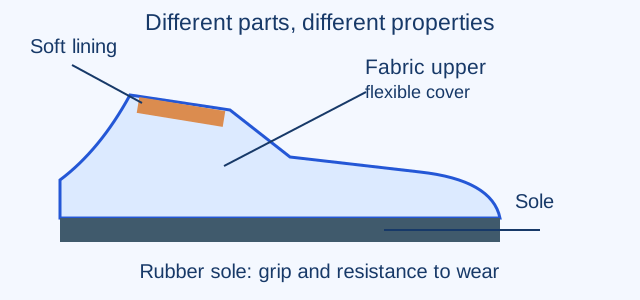
One shoe combines materials because its parts have different jobs.

The upper bends with the foot. The lining provides a soft contact surface. The rubber sole needs grip and resistance to wear. One material need not do every job. Check labels or reliable product information if a part’s material is uncertain; appearance alone may mislead.

Say: “This part needs…, so this property helps because…”. Support: Match labelled parts and property cards. Extend: Suggest a limitation of one material without claiming every variety performs identically.

Example 3: use test evidence for a decision

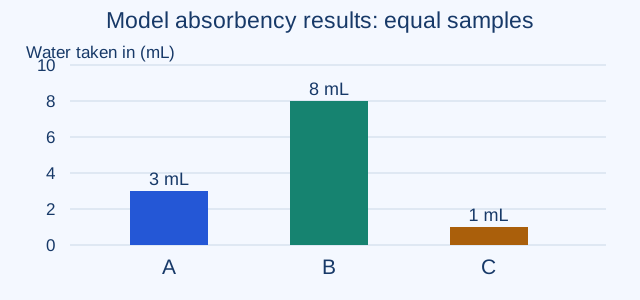
Invented model results for an equal-sample absorbency comparison: A 3 mL, B 8 mL and C 1 mL.

These are invented results, not measurements collected from named products. B absorbs the most water in this comparison and is the first candidate for a wiping cloth. It is not automatically best for a roof: soaking up water and preventing water from passing through are different properties.

  1. Use equal sample dimensions and layers, equal water volumes and equal soaking times.
  2. Record how much water is taken in; repeat the comparison.
  3. State the conclusion for these samples. Check strength or comfort separately if the product needs them.

Checkpoint: Can these results prove which sample is strongest? Answer: no, the test measured absorbency only.

Curriculum examplesCopied content

E1: Group objects by their materials

Inspect a spoon, shirt, ruler and chair using labelled samples or product information. Record each object’s material or combination. Group by metal, fibre, glass or plastic, then discuss objects that belong to more than one group. Distinguish a material name from a property or object name.

E2: Describe and compare properties

Observe safe examples of fibres, metals, glass and plastics. Transparent means a clear view through a material; translucent means light passes but details are unclear; opaque means it blocks light. Flexible materials bend, rigid materials resist bending, brittle materials may crack, and absorbent materials take in liquid. Different plastics or fibres can have different properties. Observe intact glass with adult supervision; do not scratch, bend or break it.

E3: Explain material combinations

Label the shoe model’s fabric upper, soft lining and rubber sole. Link each to flexibility, comfort, grip or wear resistance. Compare with a backpack’s fabric body, foam padding and metal zip slider. A leak-free bottle needs suitable wall material and sound seals; the material alone does not guarantee the whole product works.

E4: Learn from a named First Nations example

ACARA describes Yir Yoront Peoples of the Kowanyama region using strong, flexible lawyer cane to tie roofing to shelters. Strength helps the tie hold; flexibility lets it bend around the joined parts. This is a specific example of material knowledge linked to purpose. First Nations Peoples have diverse, continuing knowledge traditions; do not describe every community as using the same materials or practice. Use approved local sources and follow community protocols.

E5: Design, build, test and improve

Design a miniature shelter to keep a paper figure dry. Name two needs, choose materials and draw a labelled plan. With an adult, build it from clean safe scraps and test with a small agreed amount of room-temperature water over a tray. Record where water enters and whether the figure stays dry. Improve the observed weak point and repeat the same test. This is a model test, not proof of real-weather safety.

E6: Investigate recycling and alternatives

Record the materials in two clean packaging items. Check current packaging instructions and local council collection advice, because services accept particular items and combinations. A plastic identification number alone does not guarantee collection. Compare a reusable container with a single-use option: consider how many uses, cleaning needs, durability and eventual disposal. Reuse and recycling are different: reuse uses the object again, while recycling processes material into another product.
Questions and answersWith answers

Important questions and answers

What is a material property?
An observable or measurable characteristic, such as flexibility or absorbency.
Does natural mean unprocessed or always best?
No. A natural fibre can be processed into cloth, and suitability depends on its properties and the job.
Why combine materials?
Different parts need different properties, such as cushioning in padding and strength in a frame.
Is water resistance the same as absorbency?
No. Absorbency concerns taking water in; resistance to water passing through is a different requirement.
Does a recycling symbol settle every disposal decision?
No. Check the exact item, packaging instructions and current local collection rules.

Assessment-style question

A model seed box has stiff cardboard sides and a flexible plastic cover. Explain one useful property of each and propose a test of the assembled box.

Answer: Stiff sides hold the shape; the flexible cover can open or fit over it. Test whether the complete box holds the model contents or resists a small water test, depending on the stated design need. Review hint: Link each property to a part’s job and test the actual requirement.

Exit ticket and adult review evidence

  1. Name an object, one material it contains and one property that helps it work. Require three distinct ideas.
  2. Explain why equal dimensions and layers matter in a material comparison. Require recognition that an uncontrolled difference can affect results.
  3. For a leaky model roof, propose one revision and retest. Require the observed weak point, a relevant change and the same test conditions.

Reteach object/material/property language if labels are confused. Reteach fair comparisons if the learner changes several conditions. Continue when the child links evidence to a purpose, not merely a preferred colour.

Practice and reviewReady for practice

Warm-up: object or material?

Sort “bottle, plastic, towel, cotton, steel, chair”. Name three objects and three materials; explain why an object can contain more than one material.

Core: safe property stations

Compare labelled cloth, plastic and foil samples for gentle bending and water resistance. Keep sample sizes, layers, water and time equal. Observe glass without loading or breaking it. For a strength comparison, an adult uses small loads above a tray and stops at the agreed limit or first visible change; do not load objects until they shatter.

Apply: build a dry shelter

Complete the design, build, test and improve sequence in E5. Record the actual model, test observations and revision. A multiple-choice answer about building is not evidence that the practical task was completed.

Support: Provide named material samples and sentence starters. Core: Justify two material choices using observations. Extend: Compare two workable designs and identify a benefit, limitation and further test within the same properties focus.

Curriculum alignmentStart here

Students distinguish material source from material property, test observable properties consistently and justify why a material is suitable—or unsuitable—for a particular use.

Learning routine: Observe → Model → Investigate → Record → Explain → Evaluate

Success looks like

  • Classify sources carefully
  • Test properties fairly
  • Interpret evidence
  • Match properties to uses
  • Evaluate trade-offs
Teach & ExplainTeaching slides and samples

Teach this topic step by step

Explore optional teaching slide packs for classroom lessons and explanations at home.

Browse Teach & Explain · Browse Print & Go

Teachers: follow SkillrHub on TPT, then email us to request a free sample before buying. Include the year, subject and topic or curriculum code.

Request a free sample

After trying the sample, honest feedback is welcome. A TPT review is optional, where available, and does not need to be positive.