What students learn in AC9S4I06
This unit helps students build a clear, usable understanding of And create texts to communicate findings and ideas for identified.... The goal is not to memorise one answer pattern. Students should be able to explain the idea, recognise it in a new example and apply it in a short practice or worksheet task.
- Start with the main idea: write and create texts to communicate findings and ideas for identified purposes and audiences, using scientific vocabulary and digital tools as appropriate.
- Use concrete examples, pictures, oral explanation and short written responses before moving to independent practice.
- discussing the purpose of a text and identifying vocabulary appropriate to the topic and audience sharing ideas about ways to represent feeding relationships including using drawings, labels, images or models
- Finish with mixed questions so students must choose the correct strategy rather than copy the last example.
Curriculum coverage and elaborations
The content description and elaborations below show the curriculum ideas taught in this unit. Items marked as teaching context support lesson planning but may not appear in the initial eight-question activity.
- Content description: write and create texts to communicate findings and ideas for identified purposes and audiences, using scientific vocabulary and digital tools as appropriate
- E1: discussing the purpose of a text and identifying vocabulary appropriate to the topic and audience
- E2: acknowledging and learning about First Nations Australians’ ways of representing and sharing information about water sources (teaching context)
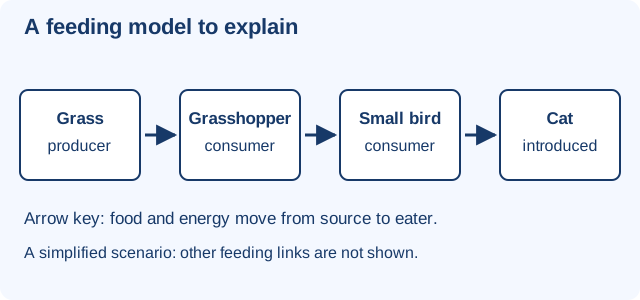
- E3: sharing ideas about ways to represent feeding relationships including using drawings, labels, images or models
- E4: producing an informative text using scientific vocabulary to explain the impact of introduced predators on food chains
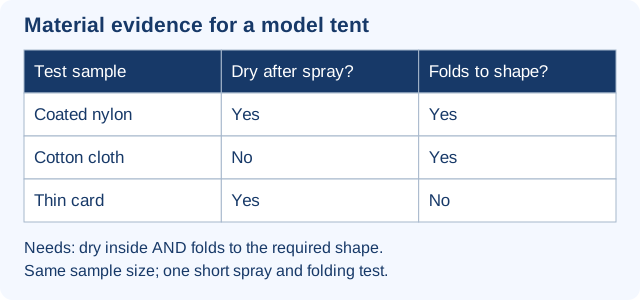
- E5: constructing a report using scientific vocabulary to explain which materials are best suited to be used for making particular products, such as nylon for tents, rubber for shoes or wool for warm clothing
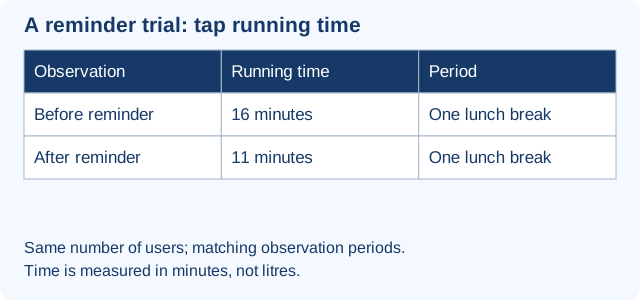
- E6: creating posters, a song, slideshow or performance to encourage the school community to save water
How to use this unit
Read the topic guide, use the teacher slide for instruction, then complete the Worksheet, Practice and Test. These three activities use the same eight-question unit bank.
Teacher resource
AC9S4I06 teacher slide
Use this one-page PDF to introduce the key idea, vocabulary and teaching sequence before students begin the activities.
Open teacher slide (PDF)Common mistakes to watch for
- Describing what is seen without connecting it to a question, pattern or prediction.
- Using everyday words only and missing simple scientific vocabulary.
- Changing more than one thing in an investigation, which makes the comparison unfair.
International curriculum mapping
This table gives closest-topic mapping for search and planning. The Australian Curriculum code is exact; overseas entries are broad equivalents because each jurisdiction structures outcomes differently.
| Region | Curriculum | Closest mapping |
|---|---|---|
| Australia | Australian Curriculum v9.0 | AC9S4I06 — write and create texts to communicate findings and ideas for identified purposes and audiences, using scientific vocabulary and digital tools as appropriate |
| Victoria | Victorian Curriculum F-10 | Year 4 Science: closest match in Communicating. Use this page as a VIC-aligned practice and worksheet reference. |
| NSW | NSW Curriculum | Stage 2 Science: closest content focus for And create texts to communicate findings and ideas for identified... and related outcomes. |
| United States | Common Core / NGSS | Grade 4 NGSS science closest topic match for And create texts to communicate findings and ideas for identified.... |
| England / UK | National Curriculum | Key Stage 2 / Year 4: closest programme-of-study match for And create texts to communicate findings and ideas for identified.... |
| Canada | Provincial and territory curricula | Grade 4 closest topic match. Canada varies by province, so use this as a broad Ontario/BC-style learning outcome reference. |
| New Zealand | New Zealand Curriculum | Level 2 Science: closest achievement-objective topic for And create texts to communicate findings and ideas for identified.... |
| India | NCERT / CBSE | Class 4 closest NCERT/CBSE topic match for And create texts to communicate findings and ideas for identified.... |